
Short answer: This article explains the key facts, eligibility issues, settlement factors, deadlines, and source-backed updates related to this legal topic. Results vary by case facts, evidence, jurisdiction, and representation.
📋 Table of Contents
Anxiety Disability Benefits: Can Your Condition Qualify for SSDI?
Anxiety disability benefits through SSDI can offer vital income when an anxiety disorder keeps you from working. The essentials: Short Answer: Can Anxiety Qualify for SSDI?
- Yes, it can – the Social Security Administration (SSA) treats anxiety disorders as conditions that may be disabling.
- Specific standards apply – your anxiety must be medically documented and must seriously restrict your ability to function.
- Core requirements:
- Medical proof of a recognized anxiety disorder.
- Evidence of “marked” limits in two or more areas of mental functioning, or one “extreme” limit.
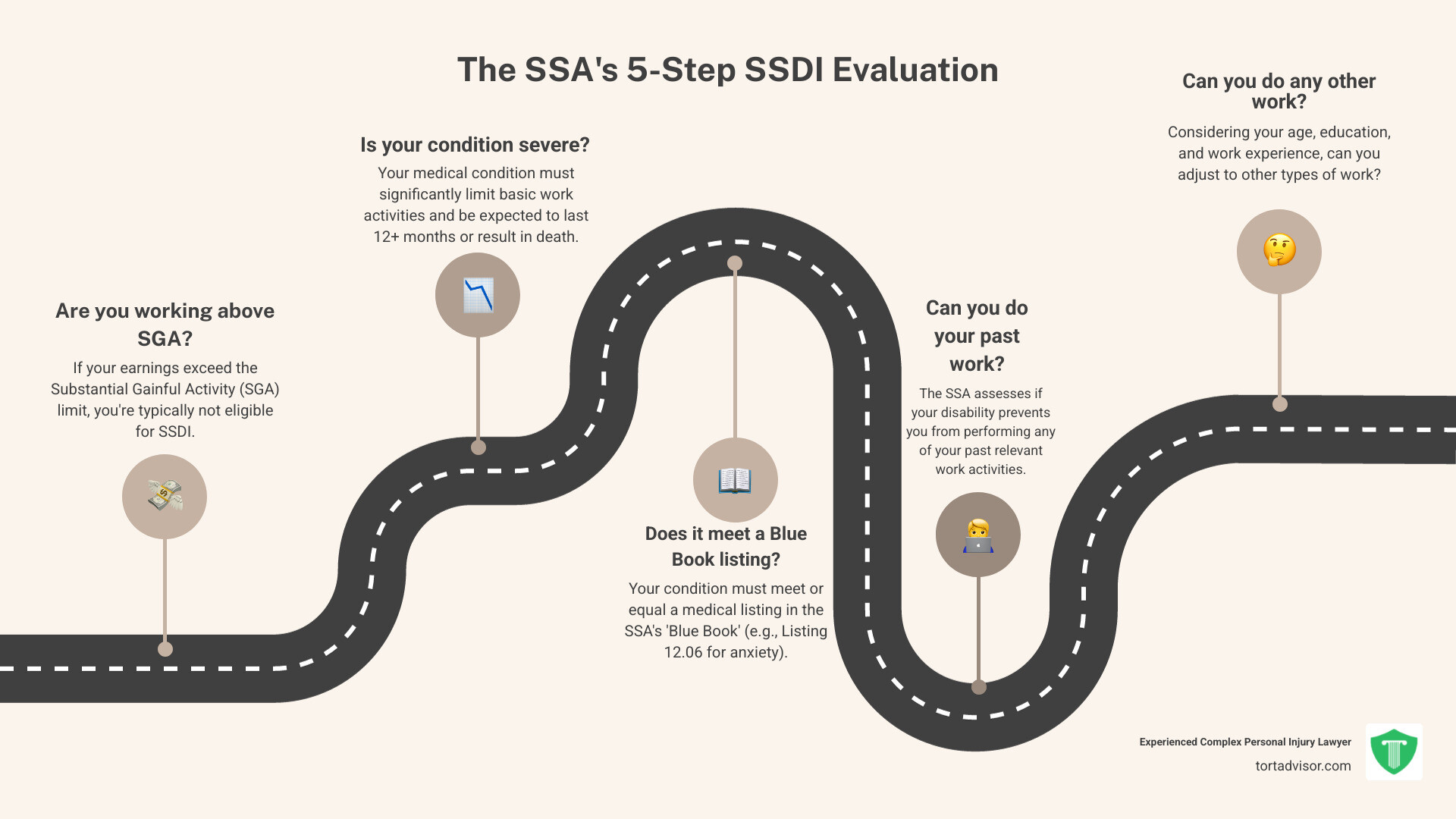
- Records showing anxiety keeps you from substantial gainful activity (earnings above $1,550/month in 2024).
- Hard, but achievable – only about 20-31% of first applications are approved, yet more than half of claimants who appeal succeed.
Disabling anxiety can take over daily life. The World Health Organization estimates that anxiety disorders affect more than 301 million people around the world. Even so, SSDI isn’t granted automatically: the SSA wants solid, consistent medical evidence and a clear picture of how symptoms rule out full-time work. First decisions can take 6-9 months, and many initial claims fail because of gaps in the records. This guide covers what the SSA looks for, which evidence helps most, and how to handle applications and appeals. I’m Mason Arnao. My background is in technology and digital marketing, but I’ve researched anxiety disability benefits in depth to help people understand the rules and find the legal help they need.
How Anxiety Can Qualify as a Disability for SSDI
Social Security Disability Insurance (SSDI) is a benefit you earn through payroll taxes. You may qualify if a medical condition keeps you from Substantial Gainful Activity (SGA), $1,550/month in 2024, and is expected to last 12 months or longer. You also need enough work credits, typically about 20 earned in the past 10 years for most adults. The SSA recognizes serious mental disorders, anxiety among them, as potentially disabling under “Blue Book” Section 12.00 Mental Disorders – Adult.
Anxiety Disorders the SSA Recognizes
A diagnosis by itself won’t do it; you must show severe functional limits that stop you from working. Recognized conditions include:
- Generalized Anxiety Disorder (GAD): constant, excessive worry with fatigue, trouble concentrating, and poor sleep.
- Panic Disorder: repeated panic attacks and dread of the next one that disrupt routines and attendance.
- Social Anxiety Disorder: crippling fear of social contact that makes working with coworkers, bosses, or customers very hard.
- Obsessive-Compulsive Disorder (OCD): time-consuming obsessions or compulsions that get in the way of routines and finishing tasks.
- Agoraphobia: avoiding places or situations such as crowds or public transit, which can make commuting or on-site work impossible.
- Post-Traumatic Stress Disorder (PTSD): trauma symptoms like intrusive thoughts and hyperarousal that wreck focus and stability.
The deciding question is how much the condition restricts work-related functioning, even with treatment.
How the SSA Evaluates Anxiety Disability Benefits Claims

When you file for anxiety disability benefits, the SSA reviews your claim under its mental disorder listings, mainly Listing 12.06 (Anxiety and Obsessive-Compulsive Disorders) in the Blue Book.
Meeting Blue Book Listing 12.06
You need to satisfy Paragraph A plus either Paragraph B or Paragraph C.
- Paragraph A (medical proof)
- GAD with three or more of: restlessness, fatigue, poor concentration, irritability, muscle tension, or sleep problems; or
- Panic disorder or agoraphobia with recurring panic attacks and ongoing worry or avoidance; or
- OCD with obsessions or compulsions that consume significant time.
- Paragraph B (functional limits)
- Either one “extreme” or two “marked” limitations in the areas listed below.
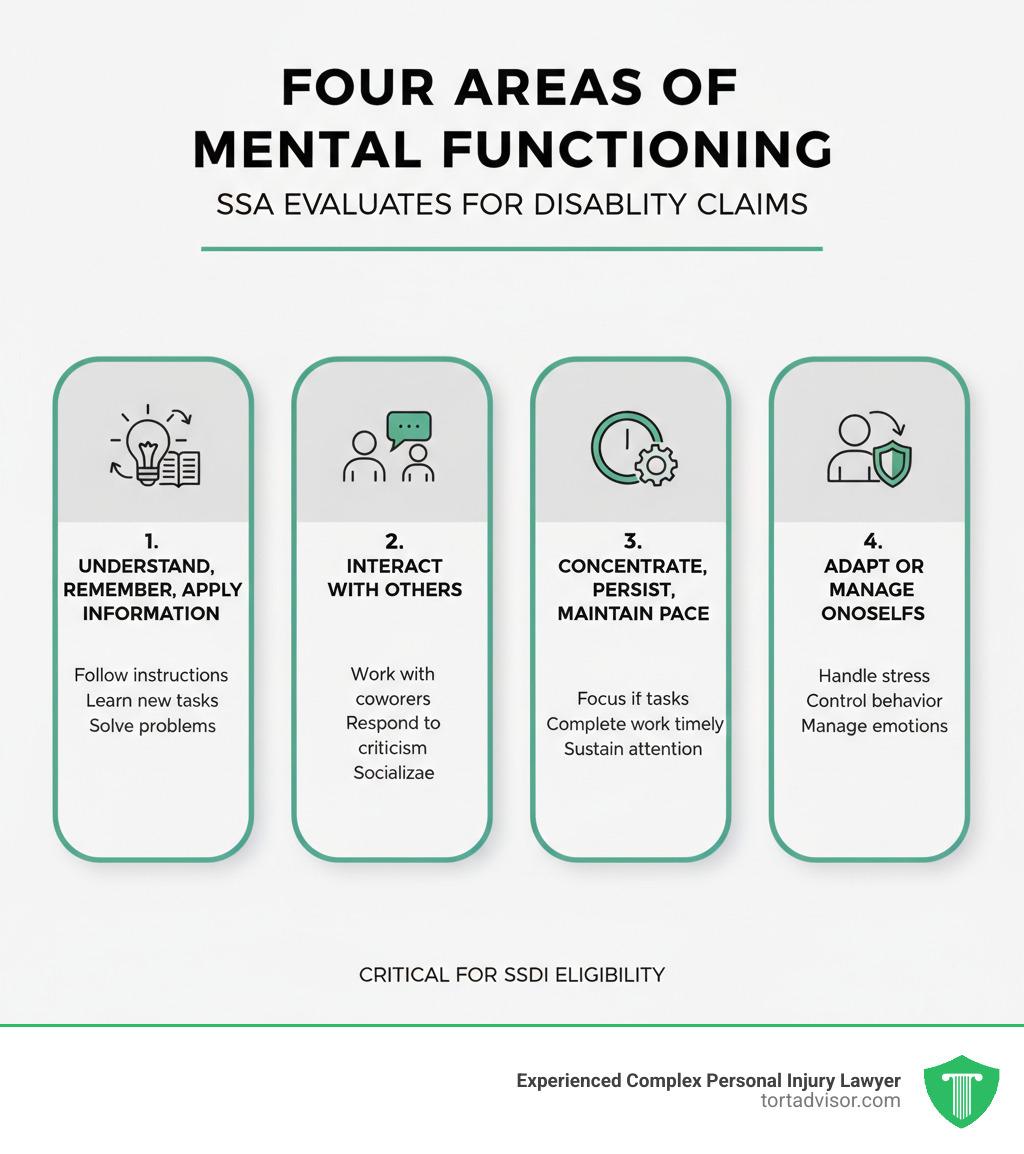
The four areas the SSA rates: (1) understanding, remembering, or applying information; (2) interacting with others; (3) concentrating, persisting, or keeping pace; and (4) adapting or managing oneself.
- Marked means a serious limit on functioning independently, appropriately, effectively, and consistently.
- Extreme means being unable to function in that area.
- Paragraph C (serious and persistent)
- Medical documentation spanning at least two years;
- Continuing treatment or support that lessens symptoms; and
- Only marginal adjustment, meaning very little ability to cope with new demands or change.
Building Your Case: The Evidence That Matters

Winning anxiety disability benefits requires clear, consistent proof that your symptoms keep you from full-time work even with treatment.
Key Medical Evidence
- Treatment records: notes from your primary doctor, psychiatrist, psychologist, and therapist covering diagnosis, symptoms, progress, and work limits.
- Psychiatric or psychological evaluations: mental status exams and testing that objectively show severity.
- Therapy notes: ongoing documentation of how often symptoms hit, what triggers them, and how they affect function.
- Medications and side effects: names, doses, changes, and impairing effects such as fatigue or brain fog.
- Medical source statement: your treating provider’s opinion on specific work limits carries real weight; learn why your doctor’s opinion matters.
- Hospital stays: any psychiatric admission is strong evidence of severity.
Residual Functional Capacity (RFC)
Falling short of Listing 12.06 doesn’t end your claim; you can still qualify through a Medical-Vocational Allowance. A mental RFC describes what you can keep up over a full schedule (8 hours a day, 5 days a week), such as following instructions, keeping pace, dealing with people, and handling stress or change. If it shows you can’t sustain even simple, unskilled work, the SSA may find you disabled, and it also considers how your daily activities reflect your limits.
Non-Medical Evidence
- Statements from others: family or friends describing panic attacks, avoidance, and everyday limits.
- Letters from past employers: attendance problems, conflicts, missed deadlines, or accommodations that didn’t work.
- Symptom diary: daily notes on how severe your anxiety was, what set it off, and how it affected you.
Applying for SSDI and Handling Appeals
Handling SSDI paperwork while living with anxiety is hard, but preparation makes it easier. The SSA’s Preparing for SSA benefits page can help you get organized.
Ways to Apply for SSDI
Apply:
- Online at SSA.gov, at your own pace;
- By phone through the SSA’s toll-free line; or
- In person at a local Social Security office.
Collect your ID, a complete list of providers with addresses and dates, medications, therapies, and a 15-year work history, using the SSA’s official checklist. First decisions usually take 6–9 months, and you may be asked for more forms or a consultative exam, so reply quickly.
If Your Anxiety Disability Claim Is Denied
Most first claims are denied, with only about 20–31% approved, often because evidence was missing, and many approvals come on appeal. You have 60 days to appeal:
- Reconsideration: a new examiner reviews your file; add updated evidence.
- ALJ hearing: you testify and present medical opinions; many claims are won here.
- Appeals Council: checks for legal or procedural mistakes.
- Federal court: the last resort.
The SSA’s guide to appealing a decision explains the steps, and an experienced disability attorney can meaningfully improve your chances.
Anxiety Disability Benefits: Frequently Asked Questions
Can I work while applying for or receiving SSDI for anxiety?
- During the application: earning above SGA ($1,550/month in 2024) will probably lead to denial, and part-time work below SGA gets close scrutiny.
- After approval: a Trial Work Period (at least 9 months) lets you test work without losing benefits, followed by an Extended Period of Eligibility in which benefits continue while earnings stay below SGA. Report all work right away. See Working While Disabled: How We Can Help.
How much does an anxiety disability check pay?
- SSDI: depends on your lifetime covered earnings, so amounts differ from person to person; the 2024 maximum is $3,822.
- SSI: based on need, with a 2024 federal maximum of $943/month for an individual, reduced by certain income.
| Benefit Type | Calculation Basis | Monthly Payment |
|---|---|---|
| SSDI | Depends on work history and Social Security taxes paid | Average: $1,200-$1,500; Maximum: $3,822 |
| SSI | Depends on financial need (income and assets) | Maximum: $943 (can be lowered by other income) |
What are my odds of approval for anxiety?
About 20–31% are approved at first, but more than half of those who appeal, particularly at an ALJ hearing, eventually win. Your chances improve with:
- Strong medical records from psychiatry and therapy,
- Statements from others backing up your account, and
- Guidance from an experienced disability attorney.
Legal Lawsuit connects people with trusted legal help for your SSDI Lawsuit, attorneys in our network experienced with anxiety-based claims.
Introduction
Anxiety Disability Benefits: A Quick Recap
Anxiety disability benefits are available when well-documented symptoms keep you from working full time.
- Anxiety can qualify. The SSA considers anxiety disorders potentially disabling.
- Severity must be proven. You need evidence of marked limits in two mental functioning areas or an extreme limit in one, plus inability to perform substantial gainful activity (above $1,550/month in 2024).
- Many win on appeal. Roughly 20–31% are approved at first; more than half succeed later.
The World Health Organization describes anxiety disorders as very common, but SSDI decisions depend on evidence rather than diagnosis alone. I’m Mason Arnao, and my research into anxiety disability benefits aims to help people understand the rules and find qualified legal help.
How Anxiety Qualifies as a Disability
SSDI is earned insurance for workers who become disabled. Generally you need recent work credits and must be unable to perform SGA ($1,550/month in 2024) for 12 months or more. Anxiety disorders can qualify under Blue Book Section 12.00 Mental Disorders – Adult.
Qualifying Anxiety Disorders
- Generalized Anxiety Disorder (GAD)
- Panic Disorder
- Social Anxiety Disorder
- Obsessive-Compulsive Disorder (OCD)
- Agoraphobia
- Post-Traumatic Stress Disorder (PTSD)
What counts is documented impairment in functioning despite treatment.
How the SSA Judges Anxiety Claims
The SSA applies Listing 12.06 to anxiety and OCD. You must satisfy Paragraph A (diagnosis and symptoms) and either Paragraph B (marked or extreme functional limits) or Paragraph C (a serious, persistent disorder with marginal adjustment). Details are in the Blue Book.
The Four Mental Functioning Areas
- Understanding, remembering, or applying information
- Interacting with others
- Concentrating, persisting, or keeping pace
- Adapting or managing oneself
Two marked limits or one extreme limit can satisfy the listing.
Evidence That Builds Your Case
Approval depends on complete, consistent evidence.
Medical Evidence
- Full treatment records (primary care, psychiatry, psychology, therapy)
- Mental status exams and psychological testing
- Therapy notes tracking symptoms and functioning
- Medication history and side effects
- A medical source statement from your treating provider on work limits; learn why a treating opinion matters
- Any hospitalizations
RFC and Ability to Work
A mental RFC captures what you can keep up across a full work week (8 hours a day, 5 days a week). If even simple, unskilled work isn’t sustainable, the SSA can approve you through a Medical-Vocational Allowance, and it also weighs your daily activities as evidence.
Non-Medical Evidence
- Statements from family and friends
- Notes from former employers (attendance, conflicts)
- Symptom journals/logs
Applying and Appealing
Filing while anxious is tough, and structure helps. Start with the SSA’s Preparing for SSA benefits page.
Ways to Apply
- File online, by phone, or in person.
- Follow the SSA checklist to collect ID, provider contacts and dates, medications, therapy details, and a 15-year work history.
- First review: usually 6–9 months. Answer SSA requests and attend consultative exams promptly.
If Your Anxiety Claim Is Denied
- File an appeal within 60 days: 1) reconsideration; 2) ALJ hearing (where many are approved); 3) Appeals Council; 4) federal court.
- Add updated medical opinions and more detail on your limits. The SSA explains how to appeal a decision.
- Experienced representation leads to better results.
More Questions About Anxiety Disability Benefits
Can I work while applying for or collecting SSDI for anxiety?
- Applying: earning above SGA ($1,550/month in 2024) usually leads to denial, and part-time work below SGA is examined closely.
- Collecting: the Trial Work Period and Extended Period of Eligibility apply; always report work. See Working While Disabled: How We Can Help.
What does an anxiety disability check pay?
- SSDI: tied to your covered earnings, so it varies; the 2024 maximum is $3,822.
- SSI: need-based; the 2024 federal maximum is $943/month for an individual.
What are my chances of approval?
First-round approvals run about 20–31%, and over half of appellants win, especially at ALJ hearings, with strong evidence and legal representation making the difference.
Conclusion
Getting anxiety disability benefits is possible with thorough records and persistence, and if you’re denied, appeal, since many claims succeed at the hearing stage. Legal Lawsuit connects you with experienced disability attorneys in our network who know how to build strong anxiety-based claims. Get trusted legal help with your SSDI claim today.
Related Posts
Quick Answer: The Boy Scouts of America (BSA) filed for Chapter 11 bankruptcy in 2020 after facing tens of thousands [...]
Quick Answer: Survivors of sexual abuse by Catholic priests, nuns, or other Church personnel may be able to file a [...]
Quick Answer: Clergy abuse settlements vary enormously based on the severity of the abuse, the strength of evidence that the [...]