
Short answer: This article explains the key facts, eligibility issues, settlement factors, deadlines, and source-backed updates related to this legal topic. Results vary by case facts, evidence, jurisdiction, and representation.
In This Guide
- Why Finding the Right Priest Abuse Lawyer Matters When You’ve Been Betrayed
- Understanding Clergy Abuse: The Scope and Devastating Impact
- The Legal Path to Justice: Holding Abusers and Institutions Accountable
- The Crucial Role of an Experienced Priest Abuse Lawyer
- Taking the First Steps Toward Healing and Justice
- Frequently Asked Questions about Priest Abuse Lawsuits
- Conclusion: Your Path to Accountability Starts Here
Choosing the Right Priest Abuse Lawyer After a Betrayal of Trust
A priest abuse lawyer is an attorney who focuses on representing people abused by members of the clergy, pursuing justice and compensation through civil claims against the abuser and against the religious organizations that failed to keep them safe. Clergy sexual abuse is a deep violation of trust that can leave psychological and emotional scars for life. It is not limited to one faith: the Catholic Church, the Southern Baptist Convention, the United Methodist Church, and other groups have all faced broad abuse allegations and accusations of cover-ups. Many survivors stayed quiet for decades, but the law has changed significantly. A number of states have updated their statutes so adult survivors can bring civil claims long after the abuse. These cases do more than compensate survivors; they push institutions to admit failures, adopt child-protection policies, and prevent future harm. Because these cases are uniquely difficult, they call for an attorney with focused experience. This guide covers who can be held responsible, how the process works, and how to find the right advocate. Qualities to Look for in a Priest Abuse Lawyer:
- Relevant Experience: A history of handling clergy abuse claims and significant settlements.
- Trauma-Informed Care: Sensitive, compassionate handling of difficult cases.
- Contingency Fees: Nothing up front; payment only if there is a recovery.
- Investigative Capacity: Access to experts and the tools to uncover evidence.
- Negotiating Strength: The ability to stand firm against powerful religious organizations.
- Open Communication: Regular updates and careful protection of your privacy.
I’m Mason Arnao. Working in data systems management has taught me how essential discretion, security, and careful documentation are — the same principles priest abuse lawyers rely on when building strong cases for survivors.
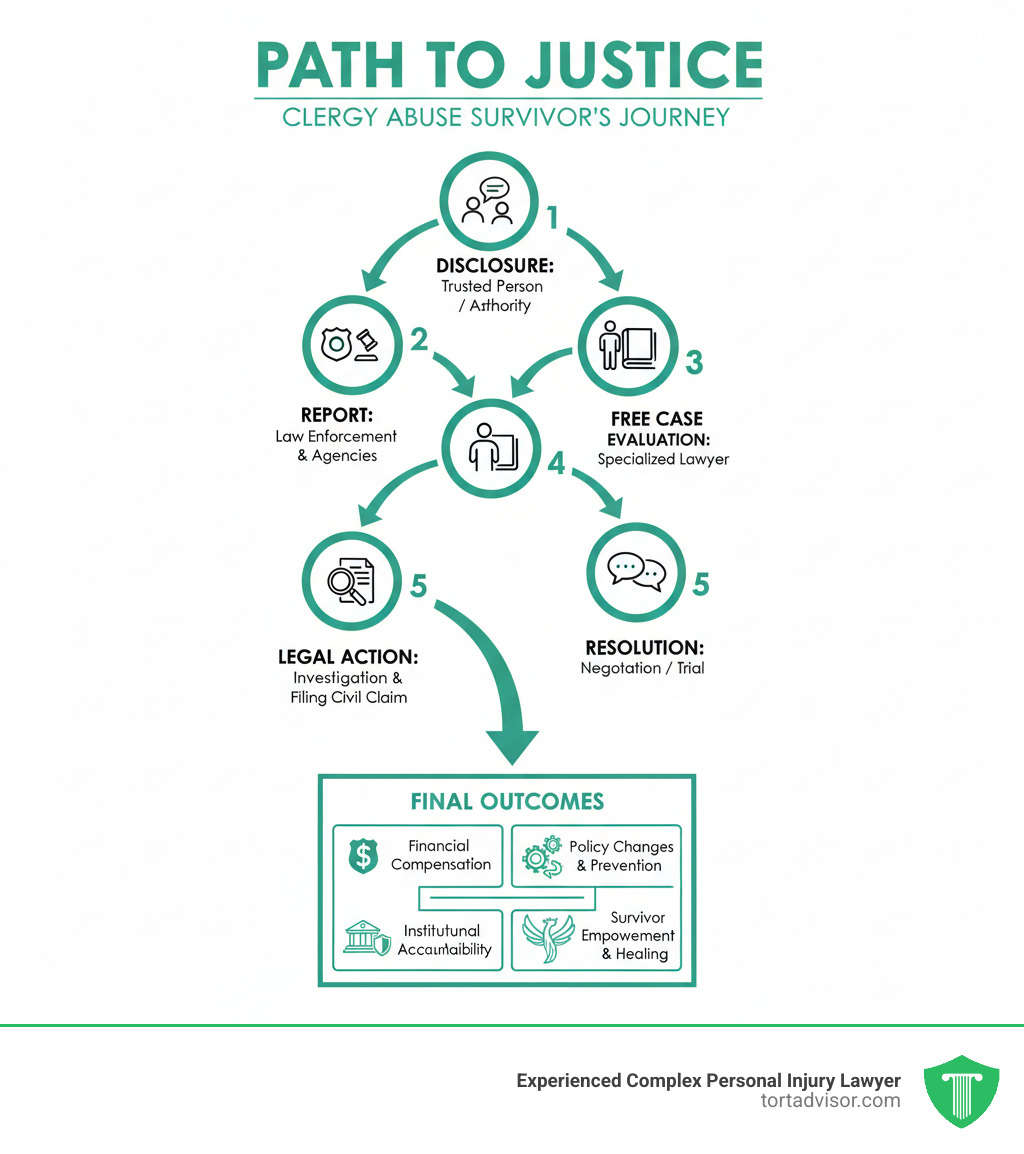
Clergy Abuse: How Widespread It Is and the Harm It Causes

Clergy abuse happens when a priest, pastor, rabbi, or anyone else holding spiritual authority uses that power to harm another person. It frequently exposes deeper problems inside religious institutions that let abuse occur and then try to hide it.
What Counts as Clergy Abuse
Clergy abuse can take several forms, each exploiting sacred trust and an imbalance of power:
- Sexual abuse: Any unwanted sexual contact, ranging from grooming and inappropriate touching to forced sexual acts and rape.
- Spiritual abuse: Using faith as a weapon to manipulate someone or excuse misconduct, often damaging the survivor’s relationship with their beliefs.
- Emotional abuse: Exploiting authority to control, belittle, or isolate someone, fostering fear and guilt.
- Physical abuse and neglect: Deliberate physical harm, or an institution’s failure to protect someone in its care.
Warning Signs That Someone May Have Been Abused
Many victims stay silent out of shame or fear, so spotting the signs is an important first step toward help. Watch for:
- Abrupt changes in behavior: A cheerful child suddenly becoming withdrawn, angry, or frightened.
- Regression: Returning to earlier behaviors such as bedwetting.
- Unexplained fear: Especially of church, certain individuals, or physical touch.
- Sexual knowledge beyond their age.
- Emotional withdrawal, ongoing sadness, or isolating from others.
- Self-harm, drug or alcohol use, or slipping performance at school or work.
How Clergy Abuse Affects Survivors Over Time
The harm from clergy abuse runs deep and can last for years. Survivors frequently face:
- Serious psychological trauma: Such as chronic depression, anxiety, and post-traumatic stress disorder (PTSD).
- Difficulty trusting others: Which can make healthy relationships hard to build.
- Overwhelming guilt and shame, despite bearing no blame.
- Spiritual crisis: Losing faith once it becomes tied to trauma.
- Struggles with relationships and intimacy.
Wounds this deep are why survivors need broad support, including legal options such as a Child Sexual Abuse Lawsuit.
Not Limited to One Faith
The Catholic Church has drawn intense scrutiny, with estimates that about 4% of priests have faced abuse accusations, but the problem reaches across faiths. The Southern Baptist Convention, United Methodist Church, Jehovah’s Witnesses, and the Mormon Church have all faced widespread abuse allegations and claims of cover-ups. Any organization built on unequal power can enable abuse, so it is important to work with a priest abuse lawyer who understands these dynamics in every denomination.
Seeking Justice: Holding Abusers and Institutions Responsible

A civil lawsuit can help you take back control, secure resources for healing, and push institutions to change. An experienced priest abuse lawyer can guide you through the process, and our overview of a Sexual Abuse Lawsuit explains your broader options.
Who Can Be Held Responsible for Clergy Abuse?
Is it possible to sue the church as well as the abuser? Yes — and that is often the most effective route. The abuser is directly to blame but frequently lacks the money to pay meaningful compensation, so claims commonly target the religious institution for its own failures under theories such as:
- Negligent Supervision: The organization knew, or should have known, about the abuser’s conduct and did nothing.
- Negligent Hiring: The organization skipped proper background checks or overlooked warning signs.
- Vicarious Liability: The organization is answerable for what its employees do.
- Concealment: The organization deliberately hid abuse, for example by moving abusers to new parishes.
Claims against institutions can drive systemic reform and provide the funds to compensate survivors.
Understanding Filing Deadlines
Statutes of limitations, the legal deadlines for filing suit, have long blocked survivors, many of whom need decades to come to terms with what happened. That is changing. Many states apply a “discovery rule,” starting the clock when the survivor connects their psychological harm to the abuse rather than when the abuse took place. Even more significant, many states have enacted “lookback windows” or Child Victims Acts that suspend or eliminate the deadline, allowing adult survivors to file no matter when the abuse occurred. By one recent count, 15 states have changed their laws to make it easier for survivors to sue. Don’t assume you have run out of time; talk to an attorney who follows these changing laws.
How Civil and Criminal Cases Differ
Criminal and civil cases are separate processes with different purposes and standards, and you can bring a civil claim even if your abuser was never charged with a crime.
| Feature | Criminal Case | Civil Case |
|---|---|---|
| Purpose | To punish a crime committed against society. | To compensate the survivor for injuries and losses. |
| Who Files | The state, through a prosecutor. | The survivor, as plaintiff. |
| Standard of Proof | “Beyond a reasonable doubt” (a very high bar). | “Preponderance of the evidence” (more likely than not). |
| Outcome | Incarceration, fines, and a criminal record. | Money damages. |
Because the civil standard of proof is lower, many survivors find a civil case a more realistic route to justice.
Damages Survivors Can Pursue
Money cannot undo trauma, but compensation recognizes what you endured and helps pay for recovery. Available damages include:
- Special Damages: Concrete costs such as medical care, therapy, and lost income.
- General Damages: Payment for intangible harm, including pain and suffering, emotional distress, and lost enjoyment of life.
- Punitive Damages: Awarded in particularly egregious cases to punish the institution and deter similar conduct.
Institutional settlements have been significant: the Archdiocese of Los Angeles paid $660 million, and the Diocese of Camden paid $87.5 million to survivors. An experienced priest abuse lawyer will work to make sure any recovery reflects the full scope of your harm. Our Sexual Abuse Settlement Calculator can help you understand the factors involved.
Why an Experienced Priest Abuse Lawyer Matters

Taking on a powerful religious institution calls for more than a general practitioner. It calls for a focused priest abuse lawyer who is both a skilled litigator and a caring advocate. An Abuse Victim Lawyer can offer the steady support this difficult process requires.
What a Priest Abuse Lawyer Does for You
A committed attorney handles the legal fight so you can concentrate on healing. That work includes:
- Investigating Thoroughly: Looking closely at the abuse, the abuser’s past, and the institution’s failures.
- Collecting Evidence: Gathering medical and therapy records, journals, and institutional documents that may reveal a cover-up.
- Interviewing Witnesses: Talking with other survivors or former staff to show patterns of abuse and negligence.
- Working With Experts: Consulting former investigators, doctors, and psychologists to strengthen the case.
- Handling Complex Law: Applying the right legal theories and contesting deadline defenses.
- Negotiating and Litigating: Pressing hard for a fair settlement, or representing you firmly and compassionately at trial.
What to Look for When Hiring a Priest Abuse Lawyer
The attorney you choose matters a great deal. Look for:
- Relevant Results: Direct experience and successful outcomes in clergy abuse cases.
- Trauma-Informed Practice: An understanding of abuse’s psychological effects and a focus on your well-being.
- Contingency Fees: No upfront charges; the attorney is paid only after a successful outcome.
- Resources for Investigation: Access to experts and the means to fund a complex case.
- Plain Communication: Regular updates and explanations you can understand.
- Compassion and Respect: Someone who believes you, validates your experience, and treats you with dignity.
How the Right Attorney Helps You Overcome Obstacles
An experienced attorney is ready for the serious hurdles these cases present:
- Hidden Records: Using legal discovery to uncover concealed documents and secret lists of abusers, such as the list revealed in the Southern Baptist Convention.
- Fear and Shame: Offering a safe, confidential setting to tell your story and handling confrontations for you.
- Intimidation: Shielding you from aggressive tactics used by powerful organizations.
- Privacy: Working to protect your identity throughout the case.
- Driving Reform: Using your case to push organizations toward stronger safety policies that prevent future abuse.
First Steps Toward Healing and Justice
Speaking up after clergy abuse takes tremendous courage. You are not alone, and there is a way forward. The first steps may feel overwhelming, but the right support can help you move toward healing and accountability. Our page on Church Religious Organization Sexual Abuse has more information.
What Survivors and Families Should Do Now
Safety and well-being come first. These practical steps can also help protect your legal rights:
- Get to Safety: Make sure the victim is somewhere safe and away from the abuser.
- Notify Authorities: Report to local police or child protective services to create an official record. Government agencies provide resources for reporting abuse.
- Get Care: Seek medical treatment for any physical injuries and find a trauma-focused therapist to begin healing, which also creates important records.
- Write Things Down: Record every detail you can recall — dates, places, and conversations — and keep any physical evidence such as letters, emails, or gifts.
- Talk to an Attorney: The most important step is contacting an experienced priest abuse lawyer, starting with a free, confidential consultation to learn your rights and options.
Support and Resources for Recovery
Legal action is only part of the journey; emotional healing is another. Resources that can help include:
- Trauma-Focused Therapy: A therapist who understands the particular betrayal involved in religious trauma.
- Survivor Support Groups: Connecting with people who understand can be transformative, and groups such as SNAP (Survivors Network of those Abused by Priests) provide community and advocacy.
- Crisis and Mental Health Hotlines: Immediate support whenever you need someone to talk to.
How Institutions Have Responded: Concealment vs. Mandatory Reporting
For decades, many institutions responded to abuse by hiding it — quietly moving abusers, concealing records, and silencing victims. The Guidepost report on the Southern Baptist Convention described leaders who put avoiding liability ahead of protecting survivors. The law is shifting, though. More states now treat clergy as “mandatory reporters” who must report suspected child abuse to civil authorities, and failing to report can bring criminal charges and expand the institution’s civil liability. This change is driving accountability and helping end cycles of abuse and concealment.
Priest Abuse Lawsuit Questions, Answered
Questions are normal before taking legal action. Here are answers to several concerns survivors often raise.
Can I sue if the abuse happened many years ago?
Often, yes. Strict statutes of limitations once barred older claims, but that is changing. Many states have opened “lookback windows” or passed Child Victims Acts that suspend or remove deadlines for survivors of childhood sexual abuse, and some states apply a “discovery rule” so the clock starts only when you link your psychological harm to the abuse. Rules differ widely by state, and by one recent count 15 states have made it easier to sue. Whether you live in Alabama, California, New York, Florida, Texas, Illinois, or elsewhere, talk with an experienced priest abuse lawyer who can review the law where you live — in a large city like Chicago or Miami or a small town — and tell you whether you have a claim. Don’t assume it is too late.
What evidence does a civil clergy abuse case require?
Abuse nearly always happens behind closed doors, so many survivors worry they lack proof. In a civil case, though, you only need to show the abuse more likely than not occurred, not the airtight proof required in criminal court. You can read more about the evidence needed to prove your case. Important evidence includes:
- Your Own Account: A detailed description of what happened is the strongest evidence you have.
- Witnesses: People who noticed changes in your behavior, saw troubling interactions, or heard you disclose the abuse.
- Records: Journals, diaries, and medical or therapy records showing how the abuse affected you.
- Church Records: Internal files, emails, or transfer documents your attorney can obtain through discovery to show negligence or concealment.
- Expert Witnesses: Psychologists who can explain how abuse works and its lasting effects.
What if the abuser has died or has no assets?
You can still pursue justice. Most clergy abuse claims are aimed at the institution that employed and enabled the abuser, so you can bring a case against the church, diocese, or religious order for negligent hiring, negligent supervision, or concealment. Importantly, religious organizations and their affiliates typically carry significant insurance for these claims, and survivor compensation usually comes from those insurers rather than from the abuser personally. If you are worried that the abuser has no money, an experienced priest abuse lawyer will focus on holding the institution and its insurers financially responsible.
Your Path to Accountability Begins Now
Exploring your legal options takes real courage. The road to justice after clergy abuse is hard, but healing is your right, justice is achievable, and you do not have to go through this alone. For too long, institutions protected their reputations instead of protecting you, and today the law increasingly favors survivors. Your voice matters, and a lawsuit can bring validation and compensation while forcing changes that protect others. The advocate you choose makes all the difference: you need a caring, experienced priest abuse lawyer who understands spiritual betrayal and knows how to stand up to powerful organizations, someone who will pursue fair compensation while guarding your privacy and well-being. Legal Lawsuit can help. As a legal-information site, we help survivors connect with experienced clergy abuse attorneys in our network through a free, confidential case review, wherever you live — Wyoming, Wisconsin, West Virginia, Washington, Virginia, Vermont, Utah, Texas, Tennessee, South Dakota, South Carolina, Rhode Island, Pennsylvania, Oregon, Oklahoma, Ohio, North Dakota, North Carolina, New York, New Mexico, New Jersey, New Hampshire, Nevada, Nebraska, Montana, Missouri, Mississippi, Minnesota, Michigan, Massachusetts, Maryland, Maine, Louisiana, Kentucky, Kansas, Iowa, Indiana, Illinois, Idaho, Hawaii, Georgia, Florida, Delaware, Connecticut, Colorado, California, Arkansas, Arizona, Alaska, and Alabama. Don’t spend another day in silence. Even if the abuse happened decades ago, changes in the law may have opened new doors. Your path to accountability and healing can begin today. Find specialized legal help for church and religious organization sexual abuse
Request a Free, Confidential Priest Abuse Case Review
If you or someone you love experienced sexual abuse by clergy, call 833-333-0905 or complete the confidential form below for a free case review.
Additional Resources
Related Posts
Quick Answer: The Boy Scouts of America (BSA) filed for Chapter 11 bankruptcy in 2020 after facing tens of thousands [...]
Quick Answer: Survivors of sexual abuse by Catholic priests, nuns, or other Church personnel may be able to file a [...]
Quick Answer: Clergy abuse settlements vary enormously based on the severity of the abuse, the strength of evidence that the [...]