

Short answer: This article explains the key facts, eligibility issues, settlement factors, deadlines, and source-backed updates related to this legal topic. Results vary by case facts, evidence, jurisdiction, and representation.
In This Guide
PFAS Health Risks at a Glance
The PFAS health risks facing Americans are serious, and cancer is the one people worry about most. Millions are exposed through tainted tap water and ordinary consumer goods, and a growing body of research ties these “forever chemicals” to several forms of cancer.
Essential Facts on PFAS and Cancer:
- Researchers estimate PFAS in U.S. drinking water is tied to more than 6,800 cancer cases each year.
- PFAS can be detected in about 45% of U.S. tap water.
- The strongest associations are with kidney and testicular cancer.
- The International Agency for Research on Cancer lists PFOA as a Group 1 carcinogen.
- Risk patterns can differ between men and women.
PFAS, short for per- and polyfluoroalkyl substances, are man-made chemicals in use since the 1940s. They earned the name “forever chemicals” because they resist natural breakdown and gradually build up inside the body.
Research has found that communities with contaminated drinking water can see cancer rates as much as 33% higher for certain types, including digestive, thyroid, mouth and throat cancers. The chemicals show up widely, from non-stick pans and food wrappers to rain gear and firefighting foam.
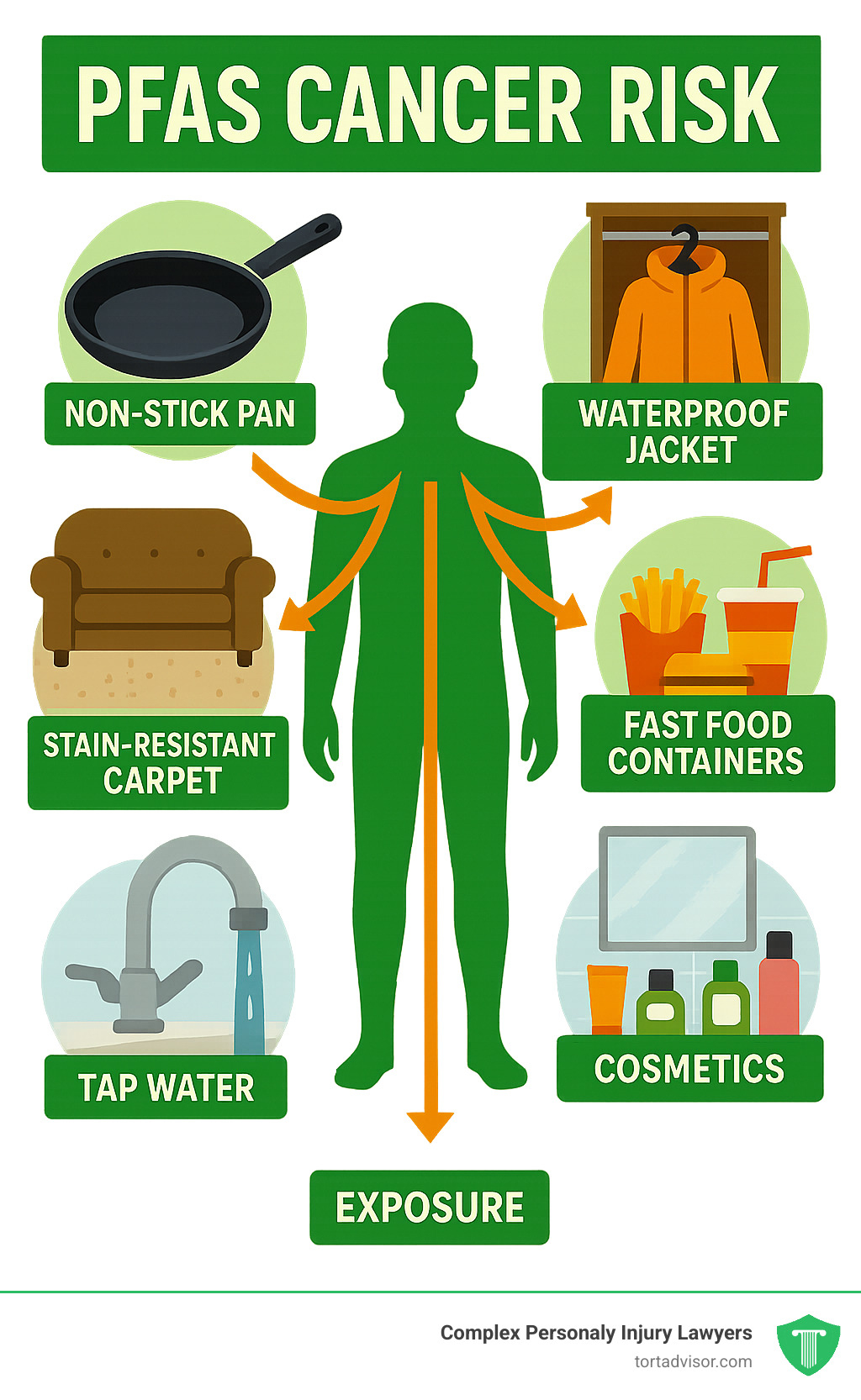
Key terms related to PFAS health risks:
- PFAS exposure risks
- Signs of PFAS exposure
- PFAS lawsuit eligibility
What PFAS Are and Why They Matter

Common products such as non-stick cookware, takeout cups and water-resistant jackets often contain PFAS, which can accumulate in the body and raise PFAS cancer risk.
Per- and polyfluoroalkyl substances (PFAS) are synthetic compounds that have been used since the 1940s to make products resist water, grease and oil, including non-stick pans, stain-proof carpet and fast-food packaging.
Their chemistry is the problem. A very strong carbon-fluorine bond makes PFAS almost impossible to destroy, so they persist in the environment and in people. This bioaccumulation means that small exposures repeated over time can add up to real health threats, cancer among them.
The main exposure routes are tainted drinking water, everyday consumer products and contaminated food. Contamination of drinking water across the U.S. has become a significant public health problem.
How Widespread Is PFAS Contamination?
The reach of PFAS is striking. A USGS study detected the chemicals in 45% of U.S. tap water samples, from city water systems to private wells. Much of the pollution traces back to industrial facilities and military installations where PFAS-based firefighting foam was used for decades, soaking into soil and traveling through groundwater to contaminate supplies miles away.
Where the ‘Forever Chemicals’ Name Comes From
The label “forever chemicals” reflects real science: PFAS are extraordinarily persistent. Because they withstand heat, water and oil, they essentially never degrade on their own.
They pile up in the environment and collect in human blood and organs. The body has little ability to break them down or clear them, so each new exposure adds to what is already there. That steady accumulation is why PFAS health risks, especially cancer, are such a long-term concern.
What Research Says About PFAS Exposure and Cancer

Scientific support for a PFAS-cancer connection has grown substantially. A major NIH-funded study published in the Journal of Exposure Science and Environmental Epidemiology compared PFAS levels in drinking water with cancer rates nationwide.
Its findings were stark: areas with contaminated water had cancer rates up to 33% higher for some types, and the authors estimated that PFAS in drinking water may contribute to more than 6,800 new cancer cases in the U.S. every year.
The International Agency for Research on Cancer (IARC) places PFOA in Group 1, carcinogenic to humans (the same category as asbestos), and PFOS in Group 2B, “possibly carcinogenic to humans.”
Which Cancers Are Associated With PFAS?
Over years of study, researchers have found notable associations with particular cancers:
- Kidney and Testicular Cancers: Among the clearest links, with higher rates seen in people with elevated PFOA and PFOS exposure, respectively.
- Breast and Liver Cancers: Higher PFOS blood levels are associated with more postmenopausal breast cancer, and PFOA exposure with greater liver cancer risk.
- Thyroid Cancer: A clear association, possibly because PFAS interfere with hormones.
- Oral Cavity and Pharynx Cancers: One recent study reported 33% higher incidence where water contained PFBS, a newer PFAS compound.
- Other Cancers: Studies have also pointed to possible links with prostate cancer and childhood leukemia.
How PFAS May Lead to Cancer
Scientists have identified several biological routes by which PFAS could contribute to cancer:
- Hormone Disruption: PFAS can interfere with the endocrine signals that control cell growth, which may allow cells to divide unchecked.
- Epigenetic Effects: They can change how genes are expressed without altering DNA itself, possibly silencing genes that suppress tumors.
- Metabolic Disruption: They interfere with how the liver handles fats and other compounds.
- Ongoing Inflammation: By upsetting the gut microbiome, PFAS can trigger long-lasting inflammation, an established cancer risk factor.
Acting together, these effects can increase PFAS cancer risk over the years.
Do PFAS Cancer Risks Differ by Sex?
The PFAS health risks men and women face are not identical. In contaminated areas, the NIH study saw more leukemia and urinary system cancers among men and more thyroid and oral cavity cancers among women. Hormones and differences in how bodies process PFAS likely explain much of this. Testicular cancer affects only men, for instance, while the postmenopausal breast cancer association applies specifically to women. Knowing these sex-specific patterns helps guide prevention and medical monitoring.
How Regulators Are Responding
As evidence of PFAS cancer risk mounted, the U.S. Environmental Protection Agency acted in April 2024, issuing the first nationally enforceable drinking water limits for six PFAS chemicals.
These Maximum Contaminant Levels (MCLs) are very stringent; PFOA and PFOS are each capped at 4 parts per trillion. The rule also tackles combinations of PFAS through a “hazard index.” Under the 2024 rule, public water systems must start monitoring by 2027 and fix excessive levels by 2029, though the EPA has since signaled it may extend some deadlines and revisit parts of the rule, so check for changes as of this update.
How Is Contamination Tracked?
The EPA gathers data through its Unregulated Contaminant Monitoring Rule (UCMR), which requires utilities to test for emerging contaminants. Results from UCMR3 (2013-2015) and the current UCMR5, which covers 29 PFAS, have been key to pinpointing affected communities and shaping the new standards. This national testing also helps scientists map contamination and measure whether cleanup is working.
Limits of the Research and What Still Needs Study
The landmark NIH-funded PFAS cancer risk study was “ecological,” comparing cancer rates between counties rather than following individuals. That design reveals broad trends but cannot show that PFAS caused any particular person’s cancer, because it cannot adjust for each person’s lifestyle or genetics.
The researchers also assumed today’s water contamination mirrors past exposure, which may not hold everywhere. Even so, the results are considered strong. Claudia Thompson, Ph.D., of NIEHS has noted that they underscore the need for further work, especially studies that follow individuals over time, to clarify the long-term health effects of these chemicals.
Practical Ways to Cut Your PFAS Exposure

PFAS are everywhere, but focused changes can reduce your daily exposure and lower your PFAS health risks. Start with the largest sources: drinking water, cookware and food packaging.
In the Kitchen
The kitchen is one of the best places to reduce PFAS intake.
- Filter Drinking Water: Choose a certified filter. Reverse osmosis is generally the most effective at removing PFAS, and activated carbon filters are a cheaper option that still works well.
- Replace Non-Stick Pans: Skip non-stick coatings and cook with stainless steel, cast iron or glass, which are PFAS-free.
- Limit Treated Packaging: Cut back on grease-proof food wrappers and microwave popcorn bags, which are frequently coated with PFAS.
Around the House and in Personal Care
Many household goods and personal care products also contain PFAS.
- Pick Furnishings Carefully: Choose carpet and upholstery without stain-repellent finishes, and favor natural fibers such as cotton or wool.
- Read Cosmetic Ingredients: Look for ingredients containing “fluoro” or “perfluoro”, which signal PFAS. Many brands now sell PFAS-free versions.
Extra Precautions for Families
Growing bodies are more susceptible, so take added care during pregnancy and childhood.
- Pregnancy and Nursing: PFAS can pass through the placenta. Even so, ATSDR guidance says the benefits of breastfeeding still outweigh the PFAS risk. Talk with your pediatrician for advice specific to your family.
- Keep Dust Down: Kids take in more PFAS through household dust. Vacuum often using a HEPA filter to trap contaminated particles.
PFAS Cancer Risk FAQs
PFAS health risks can be a lot to absorb. Below are answers to questions people commonly ask.
How can I find out whether my water contains PFAS?
On a public system, review your utility’s yearly Consumer Confidence Report (CCR), which lists contaminants found, or use the EPA’s online data tools. Private well owners must arrange their own testing, and it is strongly advised to use a certified lab that tests specifically for PFAS.
Is there a way to remove PFAS from the body?
No medical treatment currently clears PFAS from the body. Because they leave very slowly, over years or even decades, the main approach is avoiding additional exposure. If you have a history of heavy exposure, tell your doctor, who can discuss screening for related problems such as thyroid, kidney and liver conditions and keep an eye on your overall health.
What should I do if I think PFAS caused my cancer?
If you have been diagnosed with a PFAS-associated cancer, such as kidney, testicular, breast or thyroid cancer, put your health first and share your exposure history with your care team.
Next, think about talking with an attorney who handles environmental toxic tort cases. They can review your situation and explain your choices. Filing deadlines are strict in most states (often 2-3 years from diagnosis), so timing matters.
At Legal Lawsuit, we know how hard this is. Through a free, confidential case review, attorneys in our network can assess whether you may be entitled to compensation for medical costs, lost income and suffering.
Your Health and Your Legal Options
The research points one way: PFAS health risks, and cancer in particular, are a major environmental health issue. With PFAS detected in 45% of U.S. tap water and estimates tying it to more than 6,800 cancer cases a year, this is a well-documented public health problem.
Personal steps like filtering water and choosing safer products help, but they do not fix the source: the companies that made money from these chemicals for decades, in many cases while knowing the health dangers.
If you or someone you love developed cancer after PFAS exposure, you should not have to carry the financial and emotional weight alone. Compensation may be available for medical bills, lost income and pain and suffering, but these claims are complex and call for specialized legal knowledge.
Legal Lawsuit helps people connect with attorneys in our network who have experience with environmental toxic tort cases. Dealing with the legal system during a health crisis is hard, and you deserve advocates who understand both the law and the science behind PFAS contamination.
Explore your legal options with a free, confidential case review from attorneys in our network who handle PFAS cancer claims. While you concentrate on your health, an experienced legal team can work to hold the responsible companies accountable.
Additional Resources
Related Posts
Quick Answer: The Boy Scouts of America (BSA) filed for Chapter 11 bankruptcy in 2020 after facing tens of thousands [...]
Quick Answer: Survivors of sexual abuse by Catholic priests, nuns, or other Church personnel may be able to file a [...]
Quick Answer: Clergy abuse settlements vary enormously based on the severity of the abuse, the strength of evidence that the [...]

