
Short answer: This article explains the key facts, eligibility issues, settlement factors, deadlines, and source-backed updates related to this legal topic. Results vary by case facts, evidence, jurisdiction, and representation.
In This Guide
Why Your Disability Benefits Application Matters
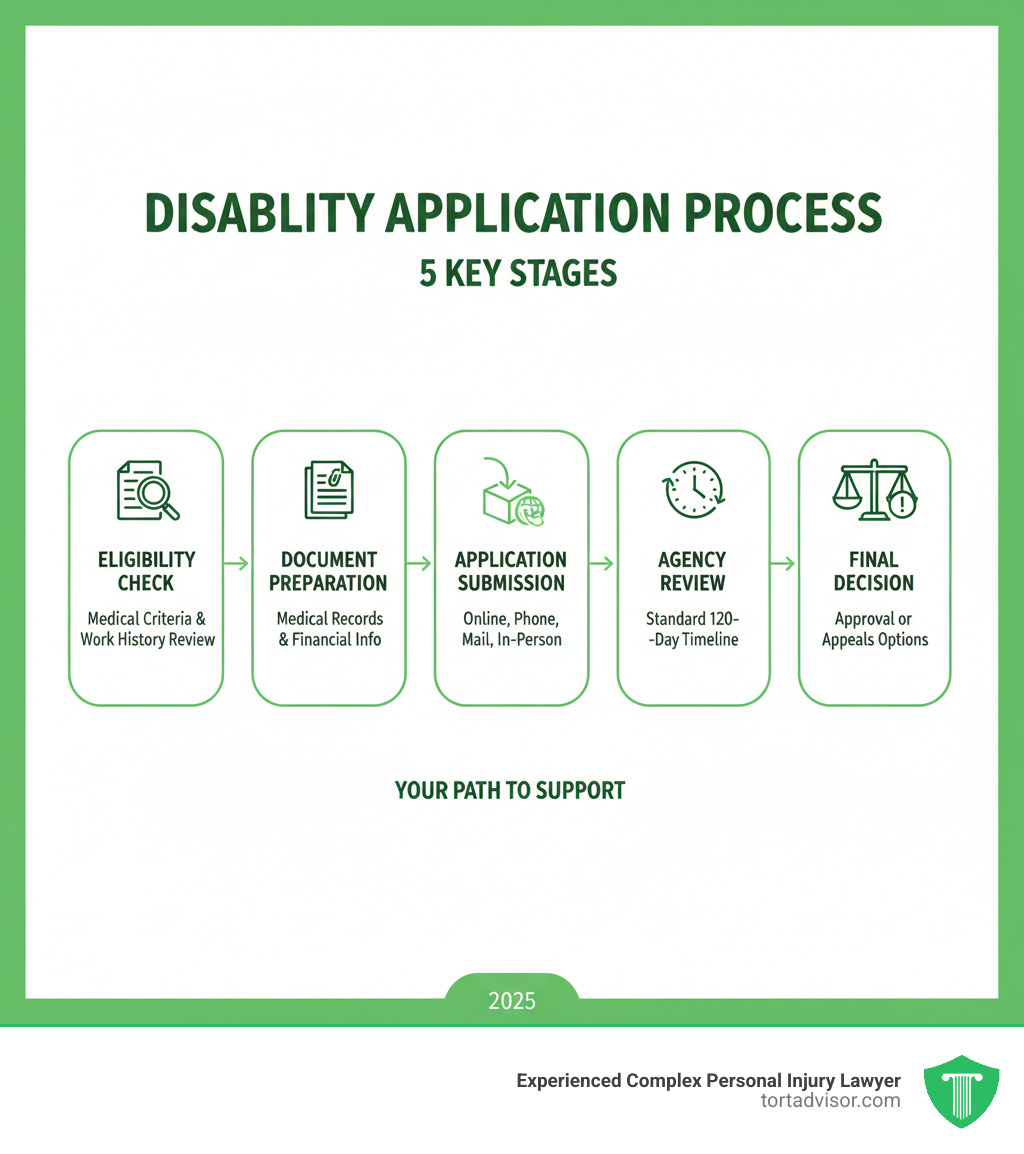
A disability benefits application is how you request income support when a health condition stops you from working. Whether you are applying for Social Security Disability Insurance (SSDI), Supplemental Security Income (SSI), Canada Pension Plan Disability (CPP-D) or a provincial program such as ODSP, knowing the process gives you a better shot at approval. Key points before you begin:
- Several ways to apply – online, by phone, in person or by mail.
- Typical wait – several months for most claims, with faster tracks for terminal or grave conditions.
- Frequent first-round denials – accuracy and completeness make a real difference.
- Paperwork required – medical records, work history and personal and financial details.
- Two parts – usually an application form plus a separate medical or disability report.
Applying for disability benefits takes time and effort, and the wait can be hard when you are already managing treatment and lost income. Understanding the process first, including what to collect and how to describe your condition, helps you avoid the mistakes behind many denials. Approval brings vital support, while a denial means a longer appeals road. This guide covers each stage for both U.S. and Canadian programs. I’m Mason Arnao, and my goal is to turn a complicated system into clear, practical steps.
Related disability benefits application topics:
- Denied disability claim
- Disability claim assistance
Disability Programs Compared
Which program fits depends on where you live and your circumstances. In the United States, Social Security Disability Insurance (SSDI) covers workers who paid Social Security taxes, and Supplemental Security Income (SSI) helps people with limited income and resources regardless of work record. In Canada, Canada Pension Plan Disability (CPP-D) serves CPP contributors, the newer Canada Disability Benefit (CDB) supports low-income working-age adults with disabilities, and provincial programs such as the Ontario Disability Support Program (ODSP) provide need-based help. The table below summarizes the differences:
| Program | Administering Body | Funding Source | Basic Eligibility |
|---|---|---|---|
| U.S. – SSDI | Social Security Administration (SSA) | Payroll (FICA) taxes | Disabled with enough work credits from covered employment |
| U.S. – SSI | Social Security Administration (SSA) | General federal revenue | Disabled with limited income and resources; no work record needed |
| Canada – CPP Disability | Service Canada | CPP contributions | “Severe and prolonged” disability plus sufficient contributions |
| Canada – CDB | Service Canada | Federal government | Disabled, low income, DTC-eligible or equivalent, ages 18–64, living in Canada |
| Canada – ODSP (Ontario) | Ontario Ministry of Children, Community and Social Services | Ontario provincial government | Ontario resident, 18 or older, substantial disability, financial need |
Identifying the right program is the first step. For personal guidance, see our Disability Claim Assistance resources.
Who Can Apply?
The central requirement is that your condition seriously limits your ability to work; a diagnosis by itself is not enough. The SSA defines disability as being unable to perform substantial gainful activity because of a medically determinable impairment expected to last 12 months or result in death, and CPP uses a similar “severe and prolonged” standard. Medical evidence is the backbone of the application and should include:
- Diagnoses from qualified physicians.
- Records of treatment, therapy and surgery.
- Lab work and imaging such as X-rays and MRIs.
- Every medication you take and its side effects.
- Provider statements describing how your condition limits work and daily activities.
The SSA’s Blue Book lists conditions that can qualify, and you may also qualify if your impairment equals a listing or if your functional limits prevent work. Work history matters for insurance programs. SSDI generally requires about 40 work credits, 20 earned in the last 10 years, with fewer needed for younger workers. CPP Disability generally requires contributions in four of the last six years, or three of six with at least 25 years of contributions. Age can help. The SSA gives extra weight to age for applicants 50 and older, recognizing how hard it is to switch careers. The official SSA website has full details.
How Other Income Affects Eligibility
Income can affect eligibility, especially for need-based programs. For SSDI, the key concept is substantial gainful activity (SGA): earning above a monthly limit means the SSA will not consider you disabled. For 2026, the SSA lists SGA at $1,690 a month ($2,830 if you are blind), and the figure changes each year. SSI has tight income and resource rules; most money you receive, including some in-kind support, can count as income, and countable resources generally must stay under $2,000 for an individual or $3,000 for a couple. ODSP is also need-based, though some income is partly or fully exempt, and all income must be reported. The Canada Disability Benefit is designed to add to, not replace, provincial support, and Ontario treats it as exempt income for ODSP purposes.
How to Complete a Disability Benefits Application, Step by Step
Breaking the process into steps makes it manageable, and careful preparation prevents delays and denials.
Collect Your Information and Documents
The reviewers only know what your documents tell them, so aim to give them the full picture. Gather:
- Identification: Social Security Number or Social Insurance Number, birth certificate and proof of citizenship or status, plus marriage and dependent information if relevant.
- Medical records: every provider with contact information and visit dates, along with diagnoses, treatments, lab work, imaging, therapy notes and psychological evaluations. Statements from your doctors about your functional limits are especially valuable.
- Medications: each drug, dose, frequency and side effect, since side effects can be as disabling as the condition.
- Work history: job titles, dates, duties, pay and reasons for leaving for the period the SSA requests (generally the past five years for past relevant work).
- Financial details: recent tax returns or W-2s, direct deposit information and any other benefits you receive.
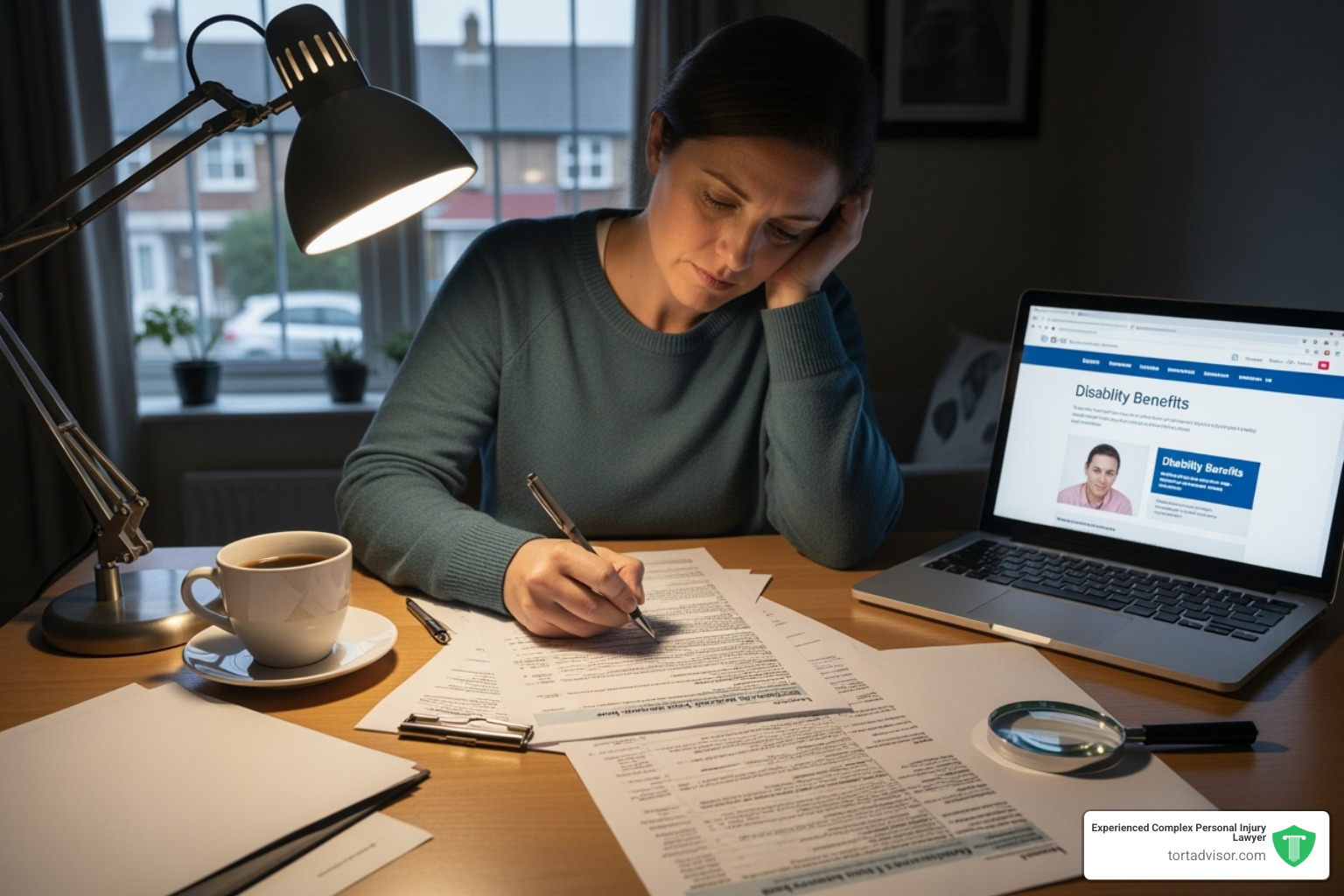
Keep everything in one binder or digital folder; complete files move faster.
Choose How to Submit
You can file a disability benefits application in several ways.
- Online: often the quickest route. U.S. applicants can apply through the SSA’s online portal, and Canadians can apply for CPP Disability through My Service Canada Account.
- By phone: for guided help, call Social Security at 1-800-772-1213 in the U.S. or contact Service Canada.
- In person: visit a Social Security field office or Service Canada centre, ideally with an appointment.
- By mail: print paper forms and send them with tracking, keeping copies.
Whatever method you use, keep a full copy of what you submit.
Tips for a Strong, Complete Application
Small details can make or break a claim.
- Check every entry: confirm names, numbers and dates, because minor errors cause delays.
- Be specific: instead of “back pain,” explain that you cannot sit longer than 15 minutes, lift a gallon of milk or dress without help. Describe limits on sitting, standing, lifting, focus and dealing with people in concrete terms.
- Respond fast: answer any request for more information right away, since missed deadlines can close your claim.
- Save everything: keep copies of all forms and letters in case anything goes missing.

Your application is your best chance to make your case. Take your time, be thorough and get help if you need it; that effort can spare you a long appeal.
After You Apply: What Happens Next
Once your disability benefits application is in, the waiting begins. Knowing what to expect can ease the stress.
Decision Timelines and Status Checks
Reviews are detailed and take time.
- U.S. (SSDI/SSI): initial decisions commonly take several months and can take longer in complex cases.
- Canada (CPP-D/CDB): Service Canada aims to decide within 120 calendar days.
- Ontario (ODSP): financial and medical eligibility are decided in stages, with targets of roughly 15 and 90 business days after initial contact.

You can track your claim online rather than waiting by the phone.
- In the U.S.: sign in to your my Social Security account.
- In Canada: use My Service Canada Account for CPP-D or CDB, and the ODSP online tools or MyBenefits for ODSP.
Online status checks are usually faster than calling.
Fast Tracks for Terminal or Grave Conditions
Expedited processing exists for life-threatening illness.
- United States: Compassionate Allowances speed up claims for certain severe conditions such as some aggressive cancers and ALS, sometimes producing decisions within weeks.
- Canada: CPP Disability targets 5 business days for terminal illness (death expected within about six months) and 30 calendar days for grave, rapidly progressing conditions.
If this applies, make sure your records clearly state the terminal or grave nature of your illness and use the CPP Terminal Illness Application (ISP-2530A).
If Your Disability Benefits Application Is Denied
Most first applications are turned down. It is frustrating, but a denial is not final, and many people approved later were denied at first. Common reasons include:
- Not enough medical evidence.
- The condition is not considered severe or long-lasting enough.
- Earnings above the SGA limit.
- Not following treatment or not cooperating with requests.
You can appeal, generally within 60 days of receiving the denial. In the U.S., the levels are:
- Reconsideration: a different examiner reviews your file and any new evidence.
- Hearing: you present your case to an Administrative Law Judge.
- Appeals Council: review of the judge’s decision.
- Federal court: a lawsuit as the final step.
Keep going. An appeal is a chance to strengthen your claim, often with an experienced attorney’s help. Read what to do after a denied disability claim and consider professional support.
Disability Application FAQs
Answers to common questions about the disability benefits application process.
How do SSDI and SSI differ?
They differ in funding and in who qualifies.
- SSDI is an earned benefit based on your work record and Social Security taxes. It has no asset test, but you cannot earn above the SGA limit.
- SSI is need-based and funded from general revenue, serving disabled adults and children with very limited income and resources regardless of work history.
Some people qualify for both at once.
Does the Canada Disability Benefit reduce ODSP?
No. The federal Canada Disability Benefit is meant to add to, not replace, provincial programs. Ontario treats it as exempt income, so it does not affect ODSP eligibility or reduce ODSP payments.
Can I work while my application is pending?
Yes, within limits. If your gross monthly earnings exceed the SSA’s substantial gainful activity limit ($1,690 for non-blind individuals in 2026), your claim will likely be denied regardless of how severe your condition is. Keep careful records of hours and pay, and consider talking with a disability attorney if you are close to the limit. If the process feels overwhelming or you have already been denied, Legal Lawsuit can connect you with independent attorneys who handle disability claims. See whether you may have a case for an SSDI appeal.
Conclusion
Reaching the end of this guide shows real determination. The disability benefits application process is detailed but manageable: learn the requirements, gather your records and submit a complete application to give yourself the best chance. If you are denied, keep going. Denials are very common, even for people who qualify, and appeals give you more chances to present evidence. An experienced disability attorney knows what evidence matters and how to avoid costly mistakes. You do not have to do this alone. Whether you are starting out, waiting on a decision or facing a denial, Legal Lawsuit can connect you with an attorney for a free, confidential review of your SSDI claim.
Additional Resources
Related Posts
Quick Answer: The Boy Scouts of America (BSA) filed for Chapter 11 bankruptcy in 2020 after facing tens of thousands [...]
Quick Answer: Survivors of sexual abuse by Catholic priests, nuns, or other Church personnel may be able to file a [...]
Quick Answer: Clergy abuse settlements vary enormously based on the severity of the abuse, the strength of evidence that the [...]