
Short answer: This article explains the key facts, eligibility issues, settlement factors, deadlines, and source-backed updates related to this legal topic. Results vary by case facts, evidence, jurisdiction, and representation.
In This Guide
Why the Right Catastrophic Injury Attorney Matters
A catastrophic injury attorney is a personal injury lawyer who focuses on severe, life-changing injuries that cause permanent disability and major financial strain. These lawyers understand the legal tests for catastrophic impairment and work to recover full compensation for injured people and their families.
How catastrophic injury cases differ:
- Much larger stakes – lifetime care and lost earnings drive claim values far higher than typical injuries.
- Complex medical proof – expert testimony and thorough records are essential.
- Lasting effects – the injury may end a career or normal daily activities.
- Specific legal definitions – some benefits require meeting statutory criteria.
- Insurer pushback – high-value claims are fought hard.
If your injury keeps you from working or requires lifelong care, look for an attorney experienced with these claims, someone who can manage the legal requirements, line up medical experts and stand up to insurers trying to shrink your recovery.
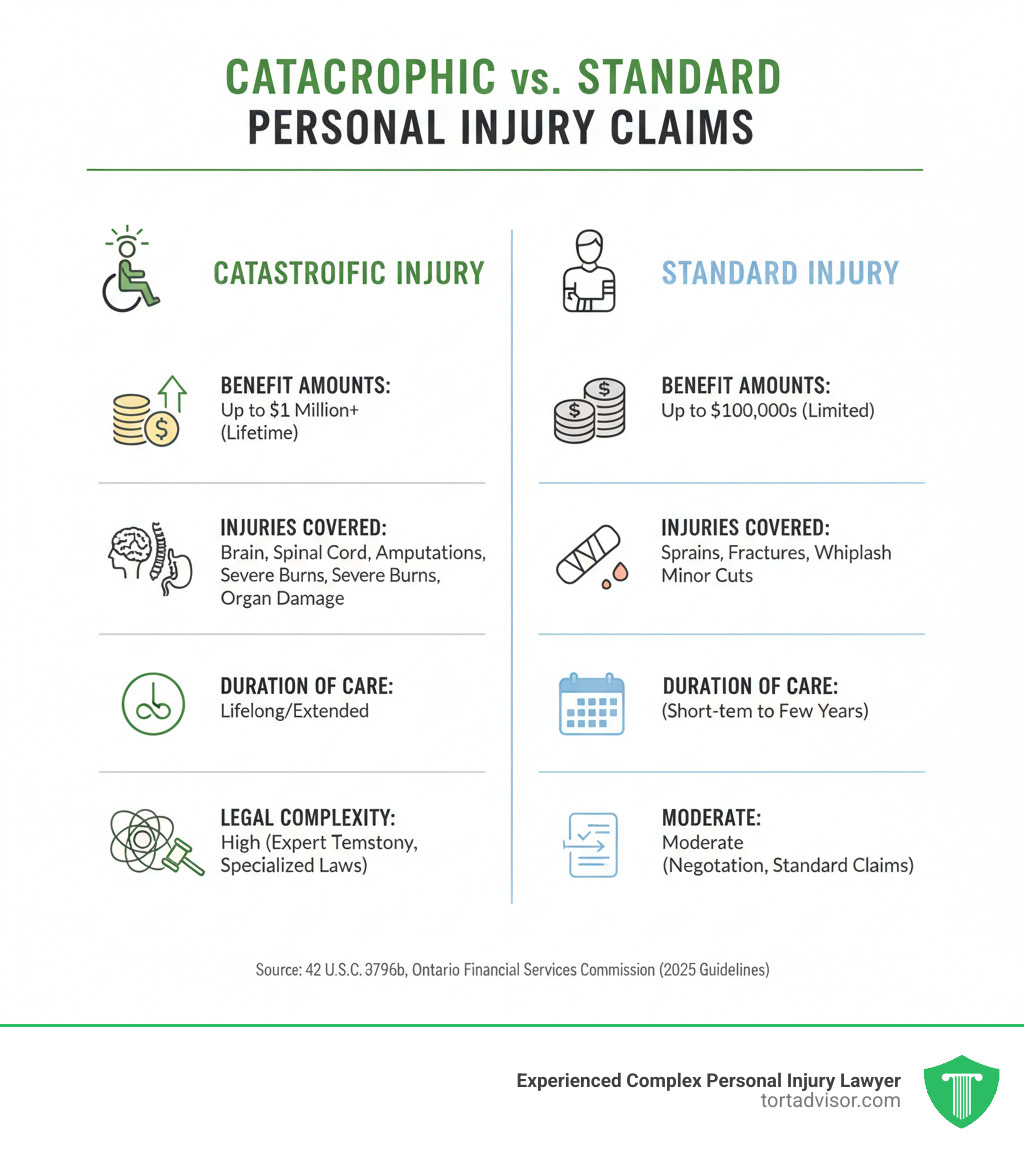
Catastrophic injuries upend lives. Federal law used for public safety officer benefits (formerly 42 U.S.C. 3796b) describes a catastrophic injury as one that “permanently prevents an individual from performing any gainful work.” Meeting a catastrophic standard can unlock much larger benefits, but proving it takes skill. In Ontario, for instance, a catastrophic designation raises available medical, rehabilitation and attendant care benefits from $65,000 to as much as $1 million, roughly a fifteen-fold difference.
I’m Mason Arnao. My expertise is in technology, and I have spent years helping people connect with the right professionals. Vetting a catastrophic injury attorney takes a methodical approach: checking credentials, confirming results and making sure the lawyer fits your situation.
Related catastrophic injury topics include common motor vehicle accident injuries, car accident compensation and auto accident injury claims.
What Legally Counts as a Catastrophic Injury
Legally, “catastrophic injury” has a defined meaning. A catastrophic injury attorney handles cases where the harm permanently changes a person’s life, often ending their ability to work and creating very large lifetime costs. Because that definition can control what compensation is available, it matters.

The question is not how frightening the accident was but how permanently it affects your ability to function and earn. If you are facing this, start by learning what a personal injury lawyer can do for you.
Everyday Meaning vs. Legal Meaning
People may call any bad crash “catastrophic,” but the law is narrower. Catastrophic impairment means a permanent disability that keeps someone from living as they did before. The public safety officer benefits statute describes it as an injury that permanently prevents any gainful work. Permanence and severity are the key elements, and in some benefit systems the designation can multiply available benefits many times over.
Catastrophic vs. Other Serious Injuries
Not every serious injury is catastrophic. The deciding factor is the long-term result: a fracture that heals is serious, while a spinal cord injury that causes paralysis is catastrophic.
| Feature | Catastrophic Injury | Non-Catastrophic Injury |
|---|---|---|
| Effect on Daily Life | Permanent disability or impairment | Temporary or recoverable, even if severe |
| Length of Care | Long-term or lifelong treatment and rehabilitation | Shorter treatment and recovery period |
| Legal Stakes | Very high, often reflecting lifetime needs | Moderate to high depending on severity |
| Potential Compensation | Much higher, including future care and lost earning capacity | Mostly current and near-term costs and lost pay |
The gap can be dramatic. Under Ontario’s accident benefits system, a non-catastrophic claim is limited to $65,000 in medical and rehabilitation benefits, while a catastrophic designation allows up to $1 million. That is why insurers contest the designation and why an experienced catastrophic injury attorney matters. Our overview of personal injury lawsuits explains how claims work.
Medical, Financial and Emotional Consequences
The full effect of a catastrophic injury unfolds over years. It often requires lifelong medical care, extensive rehab and ongoing support; first-year costs for a severe spinal cord injury can exceed $1 million, with lifetime costs far higher. Lost earning capacity can erase decades of income, and the emotional toll on injured people and families, including depression, anxiety and loss of independence, is profound. A catastrophic injury attorney accounts for all of it: immediate bills, decades of care, a lost career and diminished quality of life. Our guide to common motor vehicle accident injuries covers injuries that can lead to these outcomes.
Catastrophic Impairment Rules and How They Work
The rules for catastrophic injuries can decide whether you get enough support for a lifetime of care. Ontario’s Statutory Accident Benefits Schedule (SABS) is a clear example, setting out exactly what qualifies as a catastrophic impairment after a car accident.
Qualifying under these criteria unlocks far greater benefits, rising from $65,000 to as much as $1 million over a lifetime. Because of that difference, insurers often contest the designation, which makes experienced counsel essential. The official SABS regulation lists the detailed requirements.
Main Criteria for a Catastrophic Designation
The criteria are specific and measurable, including:
- Paraplegia or tetraplegia from spinal cord injury.
- Loss of an arm or leg through amputation.
- Total blindness in both eyes.
- Traumatic brain injury, evaluated with tools such as the Glasgow Coma Scale or, for children, specific imaging findings.
- Whole Person Impairment of 55% or more, measuring the combined effect of severe physical injuries.
- Marked or extreme mental or behavioral impairment that prevents useful functioning, based on psychological assessment.
How the Designation Changes Benefits and Damages
A catastrophic designation reshapes the claim. Under Ontario’s SABS, it raises the limit for medical, rehabilitation and attendant care benefits to as much as $1 million instead of $65,000 and adds housekeeping benefits of up to $100 per week. It can also help a victim meet thresholds for tort damages, opening the door to full compensation for pain and suffering, and it strengthens the claim in negotiations and at trial.
Why Insurers Fight Catastrophic Claims
Catastrophic claims expose insurers to huge costs, so they often contest them hard, hiring their own doctors to challenge your physicians and using tactics that limit long-term payouts. Delays, disputes and paperwork demands are common, and some insurers deny even clear claims to pressure people into settling low. An experienced catastrophic injury attorney knows these tactics and how to counter them.
How Attorneys Build a Catastrophic Injury Case
Building a strong case is a methodical process. A capable catastrophic injury attorney handles the paperwork, establishes who is at fault, calculates what the claim is truly worth and negotiates with insurers.

That means collecting evidence, retaining experts and reviewing every report. If the insurer will not make a fair offer, your lawyer files suit and prepares for trial, and preparing every case as if it will be tried gives you leverage in settlement talks. For tips on picking a lawyer, see how to find a good personal injury lawyer.
Why Independent Medical Experts Matter
Treating records alone are seldom enough. A catastrophic injury attorney works with independent experts who can evaluate your condition for legal purposes:
- Neurologists and orthopedic surgeons for brain, spine and bone injuries.
- Psychologists and psychiatrists for psychological harm.
- Life care planners who project future medical and personal care needs and their lifetime cost.
- Vocational experts who measure lost earning capacity.
Opinions from several specialists form a strong body of objective evidence that is hard for insurers to dispute.
How a Catastrophic Injury Claim Is Valued
Valuing these claims means projecting costs across a lifetime, including:
- Medical costs, past and future: surgery, therapy, medication and equipment.
- Ongoing care: long-term rehab, in-home care and home modifications.
- Lost income and earning capacity: wages lost over the rest of a career.
- Non-economic losses: pain, mental anguish and lost enjoyment of life.
- Property loss: repair or replacement of a vehicle or other property.
Economists help attorneys put precise numbers on these losses so the demand reflects everything you will need.
How to Vet a Catastrophic Injury Attorney
This is a high-stakes choice, and not every injury lawyer handles catastrophic cases well. Look for:
- Catastrophic case experience: ask about results in cases like yours.
- Trial experience: insurers tend to offer more when they know a lawyer will go to court.
- Contingency fees: no upfront cost, with the lawyer paid only from a recovery.
- Client feedback: reviews reveal how a firm communicates and treats clients.
- Access to experts: established relationships with medical and financial experts.
- Responsive, personal service: a team that keeps you informed and treats you with respect.
Legal Lawsuit can connect you with independent attorneys across the U.S. who handle catastrophic injury cases for a free, confidential review.
Insurance Fights and Other Obstacles
Recovering compensation after a catastrophic injury means dealing with deadlines and insurer resistance on top of your physical recovery.

Deadlines are strict; Texas, for example, generally allows two years to file a personal injury lawsuit, and missing it can end the claim. A catastrophic injury attorney keeps you on track. If you are unsure whether you need one, see our guide on whether you need a personal injury lawyer.
Hurdles in Proving a Catastrophic Claim
Showing that an injury meets a catastrophic standard takes precise medical records and expert support. A major obstacle is rebutting the insurer’s experts, which requires strong evidence from your own specialists. You also need to document daily limitations carefully, from work to basic tasks like getting dressed.
Handling Insurers and Claim Denials
Insurers try to limit payouts, and denials claiming an injury does not meet the criteria are common. Your attorney can start dispute resolution and challenge the decision. Watch for bad faith tactics such as deliberate delay or repeated needless document requests, and be cautious about early lowball offers made before your losses are known. Let your attorney handle communication with adjusters.
How a Case Manager Supports Recovery
A case manager coordinates complex care, scheduling specialists, therapists and counselors and advocating for timely, appropriate treatment. They also keep your catastrophic injury attorney informed about your progress, which helps build an accurate claim. Make sure your case manager works for you, not the insurer.
Catastrophic Injury FAQs
Clear answers to questions injured people and families ask most.
What compensation is available after a catastrophic injury?
Damages aim to cover all of your losses, including:
- Economic damages: past and future medical costs, lost pay, reduced earning capacity and future care such as rehab and in-home help.
- Non-economic damages: pain, emotional distress, loss of enjoyment of life and disfigurement.
- Punitive damages: sometimes available when the at-fault party acted with extreme recklessness.
A catastrophic injury attorney works with experts to calculate these damages fully.
What does a catastrophic injury lawyer cost?
Most work on contingency, so there is nothing to pay upfront. The fee is a percentage of the recovery, commonly 25% to 40%, and if nothing is recovered you generally owe no attorney fee. First consultations are usually free. See how much a personal injury lawyer costs for more.
How long do catastrophic injury cases take?
These cases can take months to years. Fast settlements are rarely fair because doctors first need to understand your long-term needs, followed by investigation, evidence gathering and negotiation, and litigation if needed. Patience is hard, but rushing usually means accepting less than a lifetime of care requires.
Choosing Your Legal Partner for the Road Ahead
A catastrophic injury can change your ability to work, care for yourself and live as you did, and the legal and financial challenges are serious.
This guide showed why a catastrophic injury attorney matters: understanding the legal standards, assembling expert evidence and standing up to insurers. The outcome can mean the difference between lifetime support and a benefit that falls far short.
You do not have to face this alone. Legal Lawsuit can connect you with independent attorneys nationwide who handle catastrophic injury cases, from California to New York.
Taking the first step lets you focus on recovery while an attorney handles the legal fight. Explore your options for a car accident lawsuit and request a free, confidential review today.
Additional Resources
Related Posts
Quick Answer: The Boy Scouts of America (BSA) filed for Chapter 11 bankruptcy in 2020 after facing tens of thousands [...]
Quick Answer: Survivors of sexual abuse by Catholic priests, nuns, or other Church personnel may be able to file a [...]
Quick Answer: Clergy abuse settlements vary enormously based on the severity of the abuse, the strength of evidence that the [...]