
Short answer: This article explains the key facts, eligibility issues, settlement factors, deadlines, and source-backed updates related to this legal topic. Results vary by case facts, evidence, jurisdiction, and representation.
In This Guide
Breast Cancer Class Action Lawsuit Overview
A breast cancer class action lawsuit lets women who developed breast cancer after using particular products or drugs pursue compensation together from manufacturers accused of hiding known risks. Common targets include:
- Chemical hair straighteners and relaxers (L’Oreal, SoftSheen-Carson)
- Textured breast implants (Allergan Biocell)
- Antipsychotic drugs (Risperdal, Zyprexa)
- Zantac (ranitidine) for heartburn
- Medical devices such as the BioZorb marker
If you used one of these and were later diagnosed with breast cancer, you may be eligible to join active litigation. These cases are usually handled on contingency, so there is no fee unless money is recovered.
Litigation in this area has expanded quickly. A 2022 study reported a 35% higher likelihood of breast cancer among women taking antipsychotic medications, and the NIH Sister Study found that frequent hair straightener users were more than twice as likely to develop uterine cancer, with newer research pointing toward possible breast cancer links too.
Behind those figures are real women seeking accountability from companies accused of concealing cancer risks for decades. I’m Mason Arnao. Through my work with technology companies serving the legal industry, I have helped people find qualified attorneys for breast cancer class action lawsuit claims, which has given me a close view of how these cases unfold.
Legal Grounds for a Breast Cancer Lawsuit

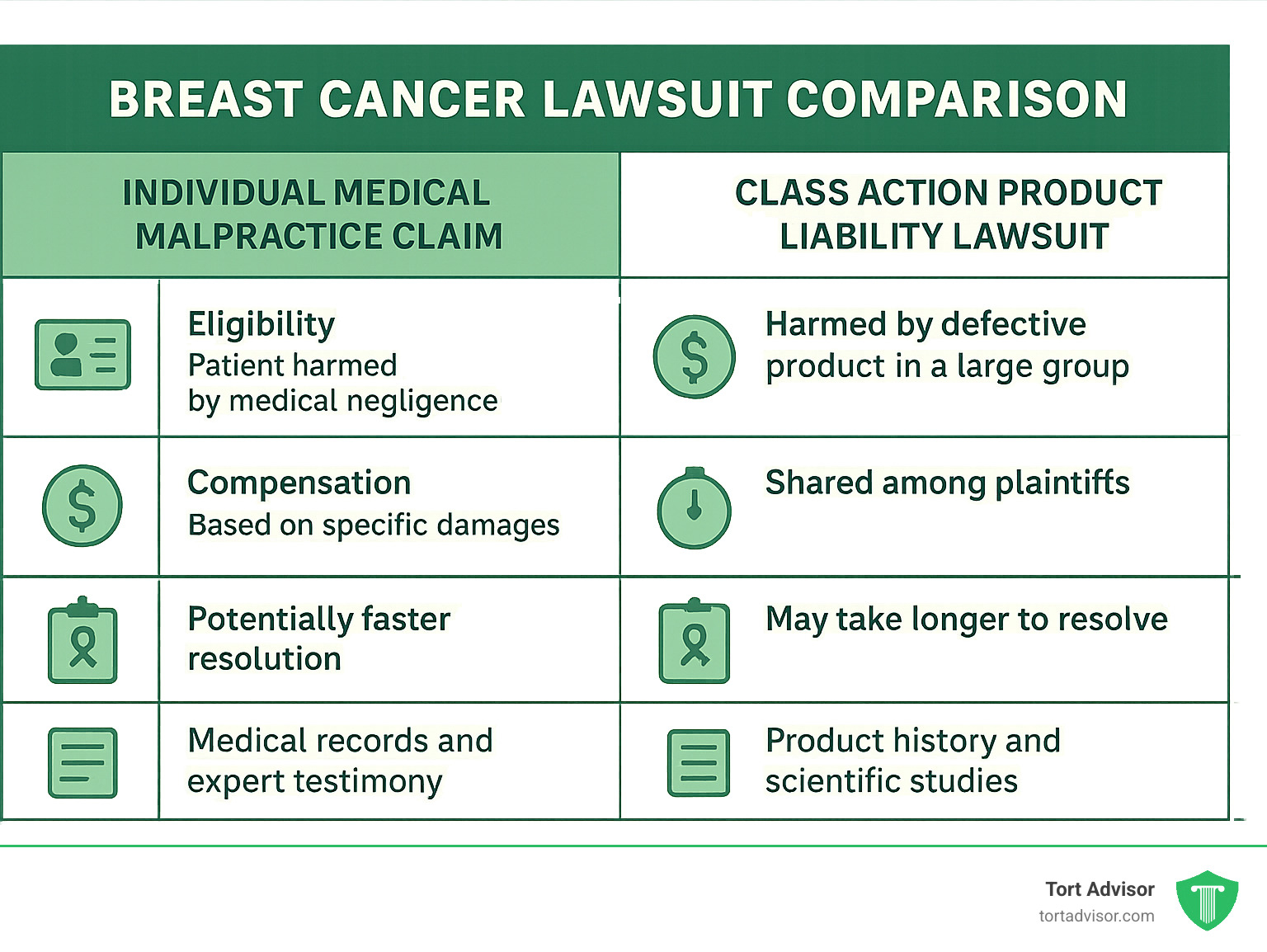
Knowing which kind of case fits your situation comes first. A breast cancer class action lawsuit pursues manufacturers over allegedly dangerous products, whereas medical malpractice targets a provider whose care fell below accepted standards.
How Class Actions Work
Class actions put strength in numbers, allowing many people with a shared injury from the same product to sue a large company together. Pooling the costs and legal work into one coordinated case makes it realistic for individuals to take on powerful corporations.
In complex litigation, courts often use multidistrict litigation (MDL), which gathers similar cases from around the country before one judge for pretrial proceedings. It streamlines the process while each person’s case remains separate for trial.
Typical Legal Claims
Attorneys bring breast cancer class action lawsuit claims under several legal theories:
- Product Liability: Companies must make reasonably safe products, and claims can stem from manufacturing defects (production mistakes) or design defects (inherently unsafe products).
- Failure to Warn: The most frequent claim in these cases, alleging a company knew of serious health risks yet did not tell consumers, violating its legal duty.
- Corporate Negligence: Alleges careless conduct such as skipping safety testing, disregarding internal research or failing to look into adverse event reports.
- Medical Malpractice: A distinct path for individual claims, usually involving misdiagnosis (missing signs of cancer) or delayed diagnosis, which can let the disease advance to a later stage.
Products and Drugs at the Center of Breast Cancer Lawsuits
A number of common products and medications are under scrutiny for possible breast cancer links. Legal Lawsuit helps readers understand these connections and the legal options that may follow.
Chemical Hair Straighteners and Relaxers
Research ties frequent chemical straightener use to higher risk of certain cancers. Many of these products contain endocrine-disrupting chemicals (EDCs), such as phthalates and parabens, that can interfere with hormones. The NIH Sister Study found frequent users more than twice as likely to develop uterine cancer, and the Black Women’s Health Study linked heavy use of lye-based relaxers to greater risk of ER+ breast cancer.
Companies such as L’Oreal, which owns SoftSheen-Carson, now face many suits claiming they sold these products without health warnings. Federal cases are consolidated in Illinois as MDL 3060, with more than 9,800 cases pending as of early 2025.
Textured and Silicone Breast Implants
Textured and silicone gel implants have been litigated for years. A key concern is Breast Implant-Associated Anaplastic Large Cell Lymphoma (BIA-ALCL), an uncommon form of non-Hodgkin lymphoma. The FDA warned that Allergan Biocell textured implants carried a notably higher risk, prompting a recall of the devices; research found Allergan’s implants had about six times the BIA-ALCL risk of other textured implants.
Earlier litigation against manufacturers such as Dow Corning and Mentor claimed that ruptured or leaking silicone implants caused autoimmune and other illnesses. Today’s cases seek payment for costs like removal surgery and ongoing monitoring. Learn more about breast implant lawsuits and claims involving Allergan implants.
Risperdal and Other Antipsychotics
Antipsychotics including Risperdal (risperidone), Invega and Zyprexa (olanzapine) have been associated with elevated breast cancer risk. They can sharply raise prolactin, a hormone involved in breast tissue growth. A 2022 study found a 35% higher likelihood of breast cancer among women on these drugs, rising with higher doses and longer use.
Drug makers such as Johnson & Johnson and Eli Lilly now face breast cancer class action lawsuit claims alleging they knew of the risk for years but kept patients and doctors uninformed while marketing the drugs aggressively.
Zantac (Ranitidine) and NDMA
Zantac (ranitidine), a widely used heartburn drug, was found to carry unacceptable amounts of N-Nitrosodimethylamine (NDMA), a probable human carcinogen. That discovery led the FDA to ask for all ranitidine products to be pulled in 2020.
Early cases centered on other cancers, but some plaintiffs allege a breast cancer connection, claiming manufacturers such as Sanofi acted negligently and did not warn consumers. The federal MDL was dismissed, yet people diagnosed with breast cancer after regular Zantac use may still be able to bring individual suits.
BioZorb and Other Medical Devices
The BioZorb marker, a 3D implant placed after lumpectomy to guide radiation, has been tied to serious problems including migration, infection, tissue damage, chronic pain and disfigurement, sometimes requiring more surgery. The FDA classified its recall as Class I, the most serious level, because of the risk of grave injury or death.
Breast cancer survivors are now suing manufacturer Hologic, Inc., alleging defective design, inadequate warnings and promotion of the device for unapproved uses.
Who Qualifies for a Breast Cancer Class Action Lawsuit?

Eligibility for a breast cancer class action lawsuit depends on the product. In general you will need evidence you used it, a breast cancer diagnosis and a reasonable connection between the two. Act promptly because each state’s statute of limitations sets a firm filing deadline. A free, confidential case review can clarify whether you qualify at no cost.
Hair Straightener Claim Requirements
Claimants usually need:
- A record of regular use of chemical straighteners or relaxers, for example more than four times a year over several years.
- A qualifying diagnosis, such as uterine cancer or ER+ breast cancer.
- Purchase records, which help but are not always necessary.
Breast Implant Claim Requirements
Eligibility typically turns on:
- The implant type, especially recalled Allergan Biocell textured implants.
- A BIA-ALCL (Breast Implant-Associated Anaplastic Large Cell Lymphoma) diagnosis.
- Surgical and medical records confirming the implant and diagnosis, which also matter for any Allergan-related claim.
Risperdal and Zantac Claim Requirements
Medication claims generally require:
- A documented prescription history for drugs such as Risperdal, Zyprexa or Zantac.
- A minimum length of use, such as at least two years for some antipsychotics.
- A breast cancer diagnosis after the medication was taken, with a clear timeline.
Process, Damages and Possible Outcomes

Understanding the process can make it less daunting. Legal Lawsuit helps you connect with attorneys in our network who handle breast cancer class action lawsuit claims and can guide you at each stage.
First Steps if You Think You Have a Claim
Preparation builds a strong case. Start by collecting medical records such as pathology reports, treatment notes and prescription histories. Then record your product use, including brands and how often; receipts help but are not always required. Finally, request a free, confidential case review with an attorney, and learn your state’s statute of limitations, since missing it can end your claim.
Damages Available in a Breast Cancer Class Action Lawsuit
Compensation is meant to address the financial and personal toll of your diagnosis and may include:
- Economic Damages: Measurable losses such as past and future medical bills, missed wages and lower earning capacity.
- Non-Economic Damages: Intangible harms including pain and suffering, emotional distress and lost enjoyment of life.
- Punitive Damages: Possible when a company’s conduct was egregious, such as concealing cancer risks, to punish it and discourage repeat behavior.
Case values differ widely. What an individual claim may be worth depends on factors such as the type and stage of cancer, the treatment required, lost income, how strongly the evidence links the product to the diagnosis and the outcome of bellwether trials in the relevant litigation.
How These Cases Can End
A breast cancer class action lawsuit may be resolved in a few ways:
- Settlement: The most common result, in which the defendant funds payments to plaintiffs, offering certainty and often a quicker end than trial.
- Jury Verdict: At trial, a jury decides; verdicts can be large but are hard to predict.
- Dismissal: A court can throw out a case for lack of evidence, though that is less likely in established litigation.
- The MDL Path: Most mass cases are consolidated in an MDL, which often uses bellwether trials (test cases) to measure jury reactions and steer settlement talks. The hair relaxer MDL, for example, has bellwether trials set for 2027 as of this update, which should shed light on how the remaining claims may be resolved.
Breast Cancer Lawsuit FAQs
Weighing legal action while coping with breast cancer is a lot. Here are answers to questions people commonly ask.
What does it cost to join a class action?
Nothing up front. Attorneys handle breast cancer class action lawsuit claims on contingency, so you owe no fee unless they obtain a settlement or verdict, and then the fee is a percentage of your recovery. If the case fails, you owe no legal fee. A free, confidential case review lets you discuss your situation with no financial commitment.
How long do these cases take?
A breast cancer class action lawsuit can take months or years. Duration depends on how complex the case is, whether it is part of an MDL, how long settlement talks last and the court’s calendar. MDLs involve extensive discovery and bellwether trials that add time but tend to produce better-informed resolutions; the hair relaxer MDL’s test trials are scheduled for 2027. An attorney can give a more precise estimate for your case.
How is a product liability case different from medical malpractice?
It comes down to who is being sued and on what basis.
- A product liability claim is brought against the company that made an unsafe product (for example L’Oreal, Allergan or Johnson & Johnson) and focuses on the product itself, alleging it was dangerous or lacked proper warnings.
- A medical malpractice claim is brought against a healthcare provider, such as a doctor or hospital, for harm caused by negligent care, like a missed diagnosis or surgical mistake, and focuses on the provider’s conduct rather than a product.
The two follow separate legal tracks with different standards and evidence requirements.
Holding Companies Accountable
A breast cancer diagnosis is hard enough, and learning a trusted product may be involved adds emotional and financial strain. You are not alone. A breast cancer class action lawsuit is an effective way to hold companies responsible, seeking compensation for those harmed and pressing manufacturers toward better testing and clearer warnings.
If you were diagnosed with breast cancer after using one of the products described here, consider exploring your options soon, since filing deadlines apply.
Legal Lawsuit’s goal is to help you connect with experienced attorneys in our network who handle these complex cases. Pursuing your claim can also advance accountability and safety for everyone. Request a free, confidential case review to learn whether you may qualify for a breast cancer class action lawsuit.
Connect with an experienced personal injury attorney
Related Posts
Quick Answer: The Boy Scouts of America (BSA) filed for Chapter 11 bankruptcy in 2020 after facing tens of thousands [...]
Quick Answer: Survivors of sexual abuse by Catholic priests, nuns, or other Church personnel may be able to file a [...]
Quick Answer: Clergy abuse settlements vary enormously based on the severity of the abuse, the strength of evidence that the [...]

